

Introduction
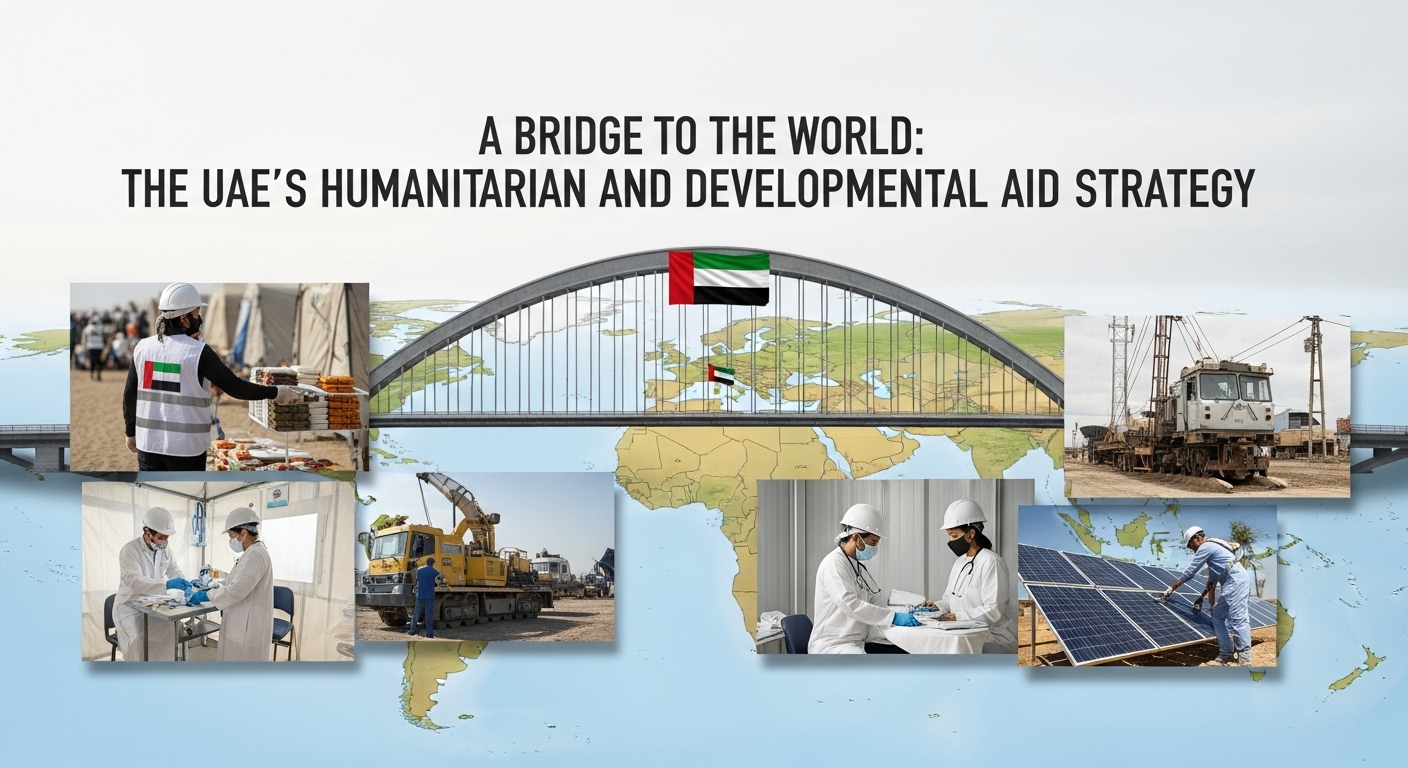
Beyond the skyscrapers and economic dynamism, the United Arab Emirates has established itself as a global leader in humanitarianism and developmental aid. This commitment is not a recent adjunct to its foreign policy but a core national value, deeply ingrained by its founding father, Sheikh Zayed, who believed that “True wealth is not material. It lies in giving and in doing good.” The UAE’s aid strategy functions as a “bridge to the world,” projecting soft power, fostering stability, and fulfilling a perceived moral responsibility. It is a sophisticated tool of statecraft that transforms financial capital into goodwill, partnership, and sustainable development across the globe.
History
The UAE’s philanthropic tradition predates the union, rooted in the Islamic principle of Zakat (almsgiving) and the Bedouin code of helping those in need. With the advent of oil wealth, this tradition was institutionalized on a global scale. The late 1970s and 1980s saw the UAE provide significant aid to countries like Egypt, Jordan, and Pakistan. The establishment of the UAE Red Crescent Authority (now the Emirates Red Crescent) in 1983 provided a structured channel for this work. The 21st century has seen a dramatic scaling-up, with the creation of dedicated entities like the Abu Dhabi Fund for Development (ADFD) and the Mohammed bin Rashid Al Maktoum Global Initiatives, transforming ad-hoc assistance into a strategic, long-term development portfolio.
Key Features
The UAE’s aid strategy is distinguished by its scope, approach, and drivers:
- Strategic and Unrestricted: UAE aid is both strategic, often aligned with foreign policy priorities in regions like the Middle East, Africa, and Asia, and needs-based, responding to global emergencies like earthquakes, famines, and the COVID-19 pandemic with remarkable speed.
- A Multi-Actor Approach: Aid is delivered through a network of government agencies, royal-family-backed foundations, and NGOs, allowing for both large-scale state projects and agile, grassroots interventions.
- Focus on Sustainable Development: Moving beyond emergency relief, the UAE heavily invests in long-term development projects. This includes building schools and hospitals, supporting women’s empowerment, funding renewable energy projects, and developing agricultural infrastructure to foster self-sufficiency.
- The Humanitarian Diplomacy: The UAE skillfully uses its aid as a tool of “humanitarian diplomacy,” building bridges with both allies and adversaries. Its ability to deliver aid to conflict zones like Syria and Yemen, often when others cannot, enhances its reputation as a pragmatic and effective actor.
Cultural Significance
Humanitarian aid is a direct expression of the Emirati national character. The deep-seated cultural value of hospitality (Al Dhiafa) is scaled to a global level. The memory of their own pre-oil hardship creates a powerful empathy for those struggling elsewhere. This commitment is a source of immense national pride for Emirati citizens, who see their country’s generosity as a reflection of its Islamic and Arab values. It shapes the UAE’s international image not as a mere wealthy nation, but as a responsible and compassionate global citizen.
Modern Relevance
In a world of complex crises, the UAE’s role as a humanitarian bridge is more critical than ever. Its aid strategy directly supports its national interests by promoting stability in regions that, if failed, could become sources of terrorism, conflict, and irregular migration. Furthermore, it opens doors for economic partnership and investment. The UAE’s high ranking on global aid donor lists (consistently exceeding the UN’s official development assistance target relative to GNI) grants it significant moral authority in international forums. As host of major international humanitarian hubs like the International Humanitarian City in Dubai, the UAE has physically positioned itself as a logistical nerve center for global relief efforts, solidifying its status as an indispensable partner in the international humanitarian system.
Conclusion
The UAE’s humanitarian and developmental aid strategy is a powerful fusion of moral conviction and strategic foresight. It is a testament to a leadership that understands that true power is not just the ability to command, but the capacity to care and to build. By serving as a bridge to the world through its generosity, the UAE has woven a global network of gratitude and partnership. This strategy ensures that the nation’s legacy will be measured not only in barrels of oil or the height of its towers, but in the lives saved, the communities rebuilt, and the hope restored in the most vulnerable corners of the planet.